OnlyFans creator scandals rarely involve one bad actor. In my review of recent cases, the pattern is almost always the same: a management “agency,” a data system, or a platform policy gap gets exploited before the creator or subscriber even knows something is wrong. Five categories dominate 2025–2026 headlines — exploitation rings, chatter-scam lawsuits, data breaches, non-consensual content leaks, and tax fraud. This guide breaks down each one using verified, on-record cases.
What Counts as an “OnlyFans Creator Scandal”?
An OnlyFans creator scandal is any publicly reported incident where a creator, an agency managing creators, or the platform itself is accused of fraud, exploitation, data misuse, or deceptive practices that harm creators or subscribers. It differs from ordinary platform gossip because it typically involves law enforcement, a lawsuit, or a formal regulatory response.
These cases fall into a few recurring buckets:
- Exploitation and trafficking rings run by self-styled “agencies”
- Chatter scams, where paid staff impersonate creators in subscriber messages
- Data breaches and scraping disputes involving creator and subscriber records
- Non-consensual content leaks, also called image-based sexual abuse
- Tax and financial fraud by individual creators
- Platform policy failures, including the slow rollout of deepfake protections
Each of these has produced a documented case in the past 18 months, and each teaches a different lesson about how the creator economy actually operates behind the subscription paywall.
How Do OnlyFans “Agency” Exploitation Schemes Actually Work?
Exploitation schemes typically start with a well-known influencer or manager recruiting young creators, promising a share of earnings, then taking control of the resulting accounts. Investigators describe a pattern of withheld pay, intimidation, and — in the most serious cases — coercion into content the creator never agreed to produce.
The clearest recent example comes from the Czech Republic. In June 2026, police charged influencer Adam Kajumi and several associates with human trafficking after an investigation found the group had forced young women to create erotic content, with some victims left with serious psychological harm. According to reporting by Deník N, Kajumi presented himself publicly as a successful entrepreneur while enticing young women to join his OnlyFans business, then managed a cut of their earnings across OnlyFans, Instagram, and TikTok. A national police spokesperson said the accused face prison terms ranging from five to twelve years if convicted.
The case underscores a structural weakness in the creator economy: management agencies often sit between the platform and the creator, and platform verification systems are built to confirm who a performer is, not how they were recruited or whether their earnings are actually reaching them. Regulators in the EU and UK have both signaled closer scrutiny of “creator management” arrangements following this case.
Why Are “Chatter Scam” Lawsuits Becoming So Common?
Chatter scam lawsuits allege that subscribers who believe they’re messaging a creator directly are actually chatting with paid staff hired by management agencies. A 2024 class action against OnlyFans and nine agency defendants claimed this practice was widespread and that the platform knew about it but failed to enforce its own rules.
The lawsuit alleged agencies trained chatters to build emotional rapport with subscribers, and that these staff never revealed they weren’t the actual creators, even when directly questioned. The suit argued OnlyFans benefited financially, since it takes a 20% cut of everything a creator earns on the platform regardless of who is doing the messaging.
In December 2025, a federal judge dismissed the case. The court found the plaintiffs hadn’t shown their messages were illegally intercepted, and that the complaint itself described agencies acting with creator authorization rather than through hacking or unauthorized access. Plaintiffs were given until January 2026 to file an amended complaint. The dismissal doesn’t settle the underlying ethical question — subscribers may still be misled — but it clarifies that “chatting isn’t literally the creator” doesn’t automatically meet the legal bar for fraud or wiretapping claims.
What this means practically: if you subscribe expecting one-on-one contact with a specific creator, understand that many accounts — especially high-follower ones — are partly or fully run by outsourced messaging teams. That’s a business model question, not necessarily an illegal one, unless a platform’s own rules are being actively violated and concealed.
How Big Are OnlyFans Data Breaches, and Should Creators Be Worried?
OnlyFans data breach claims have escalated sharply, with one 2026 forum listing alleging exposure of over 340 million user records. OnlyFans disputed the claim, but cybersecurity researchers say the risk is real regardless of the exact figure, because creator and subscriber emails can be cross-referenced against other breaches to unmask real identities.
Security researchers at Cybernews reviewed a sample of the alleged database and found it appeared to date to around August 2025, suggesting the attacker may have compiled older data rather than executed a fresh hack. The attackers themselves denied hacking OnlyFans directly, claiming instead they built the database from prior leaks and public sources. OnlyFans told Cybernews the reports were false. Separately, a UK High Court case — Infinni Innovations v OFMS Ltd — is working through allegations that a rival CRM platform used by creator-management agencies improperly scraped confidential data from a competing system, with an interim injunction upheld into 2026.
The common thread: because so many users value anonymity on the platform, even metadata-level exposure (emails, usernames, activity patterns) carries outsized risk of real-world identification, harassment, or blackmail — separate from whether explicit content itself is ever exposed.
| Scandal Type | Primary Harm | Typical Legal Route | 2025–2026 Example |
|---|---|---|---|
| Exploitation/trafficking ring | Coercion, withheld pay | Criminal trafficking charges | Adam Kajumi case, Czech Republic |
| Chatter scam | Deceived subscribers | Class action / consumer fraud | Elite Creators LLC lawsuit (dismissed) |
| Data breach/scraping | Identity exposure | Regulatory complaint / civil injunction | Alleged 340M-record leak; Infinni v OFMS |
| Content leak | Non-consensual distribution | Copyright + non-consensual imagery law | Celebforum/Telegram leak networks |
| Tax fraud | Financial/legal exposure for creator | Criminal prosecution | United States v. Perez (“Natalie Monroe”) |
What Happens When a Creator’s Content Gets Leaked Without Consent?
A leaked OnlyFans account means paid content has been copied and redistributed outside the platform, usually to forums, Telegram groups, or Discord servers, without the creator’s permission. Legal experts classify this as both copyright infringement and, in many jurisdictions, image-based sexual abuse — a term used regardless of whether the original content was made consensually.
Investigative reporting from Unbias The News documented how forums like Celebforum function less like piracy hubs and more like dedicated communities built around specific creators, with members discussing and gossiping about creators’ personalities and personal lives alongside the stolen material itself. One Slovak creator interviewed for the piece described the psychological toll after her content spread through Telegram groups, including being contacted by someone in her own neighborhood who had seen it.
Danish digital-violence lawyer Miriam Michaelsen framed the legal principle simply: a creator whose content is leaked deserves the same protection as anyone whose intimate images were shared without consent by an ex-partner. That framing matters because courts have sometimes treated OnlyFans leaks as a “business risk” rather than a privacy violation — a distinction victims’ advocates argue is both legally wrong and harmful.
What Creators Can Actually Do About Leaks
- Register copyright on content before or shortly after posting — statutory damages are only available this way.
- Send DMCA takedown notices to hosting platforms; most compliant sites act quickly.
- File under non-consensual imagery laws where available — this bypasses the “did they buy the right to view it” copyright argument entirely.
- Use platform watermarking and consider per-subscriber custom watermarks to trace leak sources.
- Work with a takedown agency if leaks are recurring across multiple platforms.
Do OnlyFans Creators Actually Get Prosecuted for Tax Fraud?
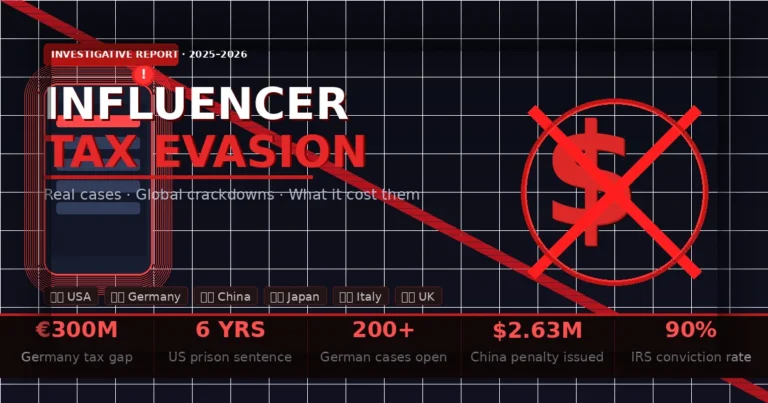
Yes — and the IRS has made high earners a visible enforcement priority. In one 2025 case, creator Natalie Perez (performing as “Natalie Monroe”) was indicted after earning more than $5.4 million on the platform between 2019 and 2023 while allegedly filing a false return and failing to pay roughly $1.6 million in owed taxes.
The IRS release describing the case is a reminder that OnlyFans issues 1099 forms like any other platform, and six- and seven-figure creator incomes attract the same scrutiny as any other self-employment income. The case remains an indictment rather than a conviction, and the defendant is presumed innocent, but it signals that the IRS now tracks platform-reported creator earnings closely enough to flag major discrepancies.
Common Mistakes, Myths, and Misunderstandings
Myth: “If content is leaked, only the leaker is liable — viewers are safe.” Largely true for criminal liability in most U.S. jurisdictions, but not universal, and distributing (not just viewing) carries real legal risk. Some jurisdictions also treat repeated, knowing consumption of unlawfully obtained content differently.
Myth: “Chatter scams are the same as catfishing.” Not legally. Catfishing implies a fake identity; chatter scams involve real creators whose messaging is partly outsourced, which courts have so far treated as a business-practices issue rather than fraud, absent clearer evidence of concealment that meets legal thresholds.
Mistake: Assuming platform verification prevents exploitation. ID verification confirms identity, not consent or fair treatment within a management arrangement — exactly the gap exploited in agency-based trafficking cases.
Mistake: Treating a data breach claim as automatically confirmed or automatically false. Both platforms and hackers have incentives to shade the truth — platforms to minimize reputational damage, threat actors to inflate the value of what they’re selling. Independent security researchers reviewing actual data samples are the most reliable source.
Frequently Asked Questions
Is OnlyFans itself under criminal investigation? No confirmed cases place OnlyFans the company under criminal investigation as of mid-2026. Scandals typically involve individual creators, third-party management agencies, or alleged hackers — not the platform’s corporate entity directly.
Can I sue if my OnlyFans content is leaked? Yes. Creators can pursue copyright infringement claims, and in many jurisdictions, non-consensual intimate imagery statutes, which don’t require proving financial damages the way copyright claims do.
Are OnlyFans data breach claims usually confirmed or exaggerated? It varies by case. Some claimed breaches are compilations of older, previously leaked data rather than fresh hacks; platforms often dispute the scale. Independent verification by security researchers is the most reliable check.
What is a “chatter” on OnlyFans? A chatter is a paid staff member, hired by a creator or their management agency, who handles direct messages with subscribers on the creator’s behalf, sometimes without disclosing that they aren’t the creator.
Did OnlyFans ban deepfakes? Yes. Under 2026 policy updates, OnlyFans banned AI-generated deepfakes and face-swap content depicting real individuals, added mandatory AI-content disclosure rules, and introduced annual creator re-verification.
Is it illegal to view leaked OnlyFans content? In most U.S. jurisdictions, simply viewing leaked content carries no direct legal liability for the viewer, though downloading, sharing, or redistributing it does, and laws vary significantly by country.
How do creators protect themselves from exploitative management agencies? Verify an agency’s standing independently before signing, insist on written, transparent payment terms, retain control of account credentials where possible, and consult a lawyer before agreeing to revenue-share arrangements.
The Bottom Line
OnlyFans creator scandals in 2025–2026 cluster around five predictable failure points: agency exploitation, deceptive messaging practices, data security, non-consensual leaks, and tax compliance. None of these are unique to adult content platforms — they mirror gig-economy and data-privacy problems seen across the creator economy — but the stakes are higher because of the intimate nature of the content involved.
If you’re a creator, the practical takeaway is concrete: vet any agency before signing, register your content’s copyright, enable every available watermarking and privacy tool, and treat your platform earnings like any other self-employment income at tax time. If you’re a subscriber or researcher, the takeaway is to treat breach and scandal claims with informed skepticism until they’re verified by court filings, law enforcement statements, or independent security research — not forum rumor.
What you read shapes who you become—choose our high-value blog posts.