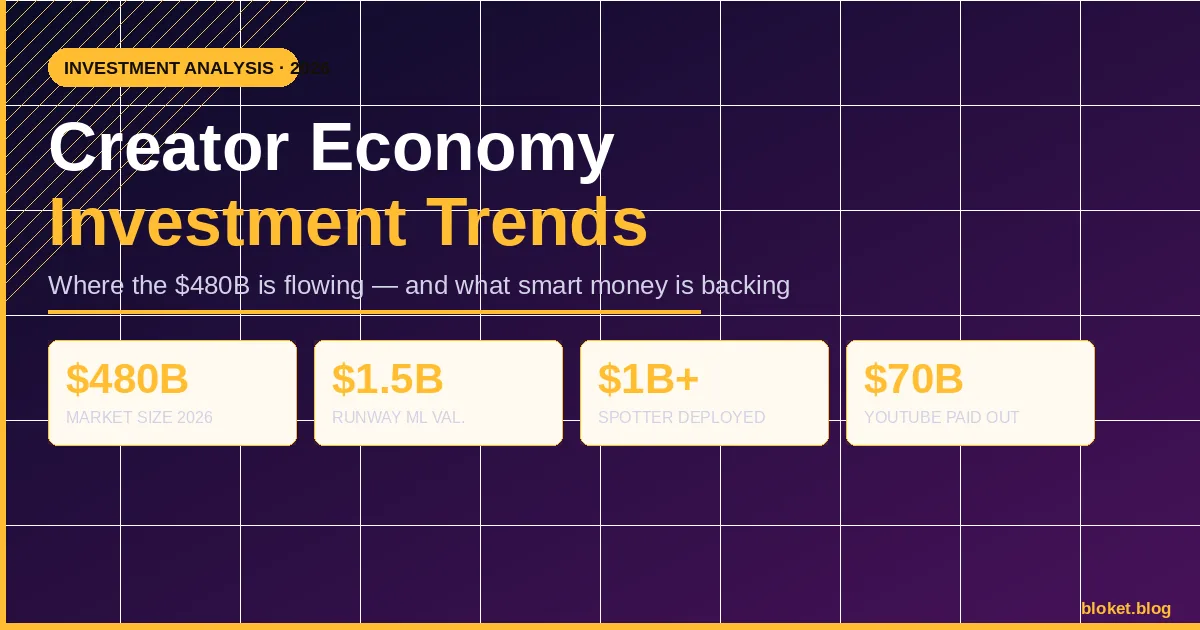
The creator economy is no longer a side bet for venture capital. It’s a $480 billion market, and the money flowing into it has fundamentally changed shape over the past two years. VCs aren’t just backing platforms anymore — they’re betting on creator-owned businesses, AI production tools, and financial infrastructure built specifically for people who make content for a living.
This guide breaks down where investment is actually going in 2026, which categories are heating up, and what the smarter bets look like — whether you’re a creator trying to understand your options or an investor mapping this space.
What Is the Creator Economy and Why Are Investors Paying Attention?
The creator economy is the ecosystem of tools, platforms, and businesses built around independent content creators — YouTubers, podcasters, newsletter writers, course sellers, and anyone else who monetizes an audience directly. As of 2026, Goldman Sachs estimates the total market at roughly $480 billion, up from $250 billion in 2023.
That growth alone explains the investor interest. But the more interesting shift is structural.
For the first five years of this market, “investing in the creator economy” mostly meant investing in the platforms — YouTube, TikTok, Twitch. Those bets made sense when creators were tenants inside someone else’s building. The problem is that tenants don’t build equity.
What’s changed is that a critical mass of creators figured this out. MrBeast didn’t just build a channel — he built Feastables, a snack company with retail distribution in thousands of stores. Emma Chamberlain launched Chamberlain Coffee. The biggest creators started treating their audiences as business assets, not just view counts. And investors followed.
Now the money is chasing a different question: who builds the rails that creator-businesses run on?
Where Is the Money Actually Going in 2026?
Investment in the creator economy in 2026 breaks down into four distinct categories. Each has different risk profiles and different timelines.
1. Creator-Owned Business Infrastructure
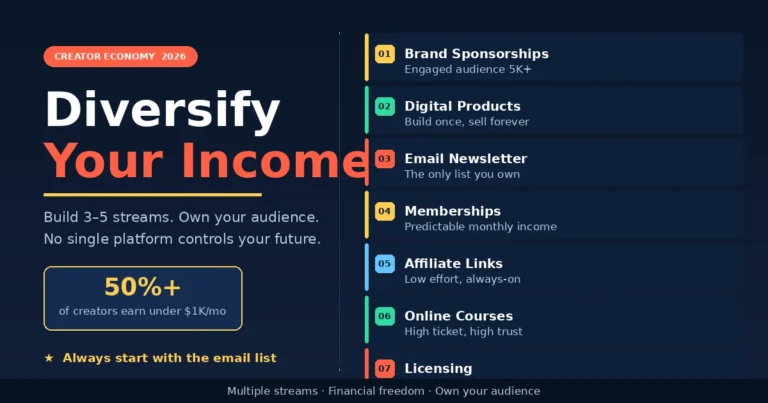
This is the fastest-moving category. Creators increasingly want to own their revenue streams outright — not take a 30–55% platform cut on memberships or a 45% split on ad revenue.
Beehiiv, a newsletter platform built specifically for monetization, raised $33 million in Series B funding in 2024. Ghost, its open-source competitor, has grown subscription revenue to the point where it no longer needs outside capital. Patreon, despite a rocky few years, processes over $1 billion annually for creators and continues to attract institutional interest.
The investment thesis here is simple: if creators are small businesses, they need business software. And they’re willing to pay for tools that don’t take a percentage of their earnings.
2. AI Production Tools
This is where the volume of deals is highest right now. The pitch is straightforward — AI drops the production cost of content by 60–80%, which means more creators can operate at a professional level without a full production team.
Descript, which lets creators edit video by editing a text transcript, raised $100 million at a $553 million valuation. ElevenLabs, which handles AI voice generation, hit a $1.1 billion valuation in 2024. Runway ML, used heavily by video creators, reached $1.5 billion.
What’s notable about these investments is that they’re not creator-specific tools that got popular with creators — they’re tools built with creator workflows as the primary use case. That’s a meaningful distinction for investors evaluating moat.
3. Creator Funds and Revenue-Based Financing
A newer category, and one that’s genuinely interesting: financial products designed specifically for creators. Traditional banks don’t know how to underwrite a YouTuber. Your income is variable, your “asset” is an audience, and you have no physical inventory.
Companies like Spotter and Creative Juice stepped in to fill that gap. Spotter pays creators a lump sum upfront in exchange for a percentage of future YouTube ad revenue. It’s essentially revenue-based financing applied to content libraries. Spotter has deployed over $1 billion to creators including MrBeast, Dude Perfect, and Marques Brownlee.
Institutional investors like SoftBank and Andreessen Horowitz have put money into this category not because content is sexy, but because the underlying math looks like a structured financial product. Creator revenue from established channels is surprisingly predictable. That’s attractive.
4. Creator-to-Consumer Brands
This is the highest-upside but highest-risk category. The logic: a creator with 5 million engaged subscribers has something that took most consumer brands decades to build — a direct relationship with a specific audience demographic.
Prime Hydration, backed by the Logan Paul and KSI audience, hit $250 million in retail sales in its first year. Feastables crossed $10 million in monthly revenue within months of launch. These numbers attracted serious CPG investors who saw creator-led brands as a cheaper customer acquisition channel than traditional advertising.
The risk is that the audience follows the creator, not the brand. When the creator burns out, moves on, or has a controversy, the product takes the hit. Investors who understand this are putting smaller checks into more creator brands rather than betting big on any single one.
What Do Successful Creator Economy Investments Look Like in Practice?
Let’s get specific, because “creator economy investment” can mean wildly different things depending on who’s writing the check.
Andreessen Horowitz (a16z) has been probably the most vocal institutional backer of this space. Their creator economy thesis, published in 2022 and revised in 2024, explicitly states that they’re betting on “the top 1% of creators becoming multi-million dollar businesses.” Their portfolio includes Substack, Beehiiv, and several AI tooling companies.
The Chernin Group took a different approach — direct investment in creator-founded companies. They backed Barstool Sports early (later acquired by Penn Entertainment for $551 million) and have since invested in several podcast networks. Their model looks more like traditional media M&A than startup VC.
YouTube’s Creator Fund and TikTok’s Creator Fund are worth mentioning not as pure investment vehicles but as competitive tools. YouTube paid out $70 billion to creators over three years through its Partner Program. That money isn’t charity — it’s platform lock-in. The platforms are investing in creator retention because their own valuations depend on it.
What distinguishes the better investments in this space is a clear answer to one question: what happens to this business if the creator stops making content? Creator-owned brands and creator tools have an answer. A specific creator’s channel does not.
Common Mistakes Investors Make When Entering the Creator Economy
Most mistakes in this space come from applying traditional media thinking to a fundamentally different business model.
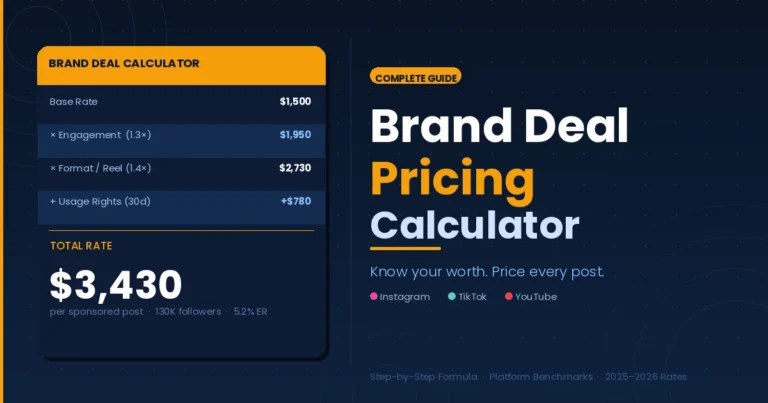
Mistake 1: Confusing audience size with business viability. A creator with 10 million subscribers and 3% engagement is a worse business than a creator with 200,000 subscribers and 18% engagement. The second creator has a real relationship with their audience. The first has reach. Advertisers care about reach. Brand partnerships, product launches, and community tools care about relationships.
Mistake 2: Backing platforms instead of infrastructure. The platform wars are mostly over. Investing in a new social platform to compete with YouTube or TikTok in 2026 is an extremely difficult bet. Investing in the picks-and-shovels that creators use regardless of which platform wins is a different calculation entirely.
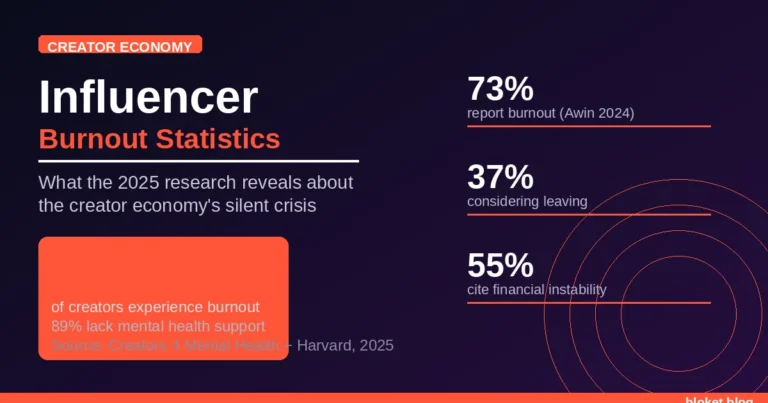
Mistake 3: Underestimating creator burnout risk. This is a real operational risk that most investment memos don’t address adequately. The majority of full-time creators work 50–60 hours a week. The average “career” of a top creator has historically been 4–7 years before major burnout or pivot. Any investment tied to a single creator’s continued output needs to account for this in the financial model.
Mistake 4: Overvaluing short-form video economics. TikTok’s creator fund pays roughly $0.02–$0.04 per 1,000 views. At those rates, you need 50 million monthly views to earn $2,000. Creators on TikTok are not building sustainable businesses from platform revenue — they’re using it as a top-of-funnel for other products. Investments premised on short-form video ad revenue alone don’t math out.
Mistake 5: Missing the international market. Most creator economy investment analysis focuses on English-language content and US audiences. The actual growth is in Southeast Asia, Latin America, and Sub-Saharan Africa, where smartphone penetration is rising fast and creator middle classes are forming. Investors who only look at US metrics are seeing about 30% of the real picture.
Creator Economy Investment Trends: Comparison Table
| Investment Category | Risk Level | Time Horizon | Example Companies | Key Metric |
|---|---|---|---|---|
| Creator Infrastructure (SaaS) | Medium | 5–7 years | Beehiiv, Ghost, Kajabi | MRR growth, churn |
| AI Production Tools | Medium-High | 3–5 years | Descript, Runway, ElevenLabs | DAU, creator retention |
| Revenue-Based Financing | Low-Medium | 2–4 years | Spotter, Creative Juice | Revenue predictability |
| Creator-to-Consumer Brands | High | 3–6 years | Feastables, Prime Hydration | Revenue per follower |
| Creator Funds | Variable | Ongoing | YouTube, TikTok | Payout per 1K views |
FAQ: Creator Economy Investment Trends
How big is the creator economy in 2026? Goldman Sachs pegs the global creator economy at approximately $480 billion as of 2026, up from $250 billion in 2023. That growth rate outpaces most traditional media sectors. The number includes platform revenue, creator-owned business revenue, brand deals, and the growing ecosystem of tools and financial products built specifically for creators.
What types of companies attract the most creator economy VC funding? In 2025–2026, AI production tools and creator-owned business infrastructure are attracting the most deal volume. Companies like Descript, ElevenLabs, and Beehiiv have each raised $30 million or more. Revenue-based financing for creators — a smaller but growing category — is also drawing interest from institutional investors who see creator revenue as an underwritten financial product.
Is investing in a creator’s channel or brand a good business decision? It depends entirely on whether the business can survive without the creator’s active involvement. Creator-to-consumer brands like Feastables have real supply chains and retail distribution independent of MrBeast’s daily output. A creator’s YouTube ad revenue does not. Investors who can distinguish between these two structures make better bets.
How does creator economy investment differ from traditional media investment? Traditional media companies own intellectual property — shows, music catalogs, film libraries. Creator economy investments are often tied to audience relationships, which are much harder to value and transfer. The better analogy is investing in a small business owner rather than a content library. That changes how you think about management risk, succession, and exit multiples.
What role is AI playing in creator economy investment trends? AI is doing two things simultaneously. First, it’s reducing content production costs dramatically, which lowers the barrier to entry and increases the number of creators operating at a professional level. Second, it’s creating an entirely new category of tools to invest in. Companies building AI specifically for creator workflows — video editing, voice generation, thumbnail design — raised over $3 billion combined in 2024.
Which creator economy segments are declining? MCN (multi-channel networks) investment has dried up almost completely. The MCN model — aggregating creator channels and taking a management fee — worked in 2014 when creators needed help navigating platform relationships. In 2026, most established creators manage those relationships directly. Ad network middlemen are also under pressure as programmatic ad revenue gets more efficiently captured by platforms directly.
What are the best indicators of a strong creator economy investment? Platform independence is the first thing I look for. Does the business generate revenue across multiple channels, or is it dependent on one platform’s algorithm? Second is recurring revenue — memberships, subscriptions, product sales — over one-off brand deals. Third is the creator’s engagement rate, not their subscriber count. A 5% engagement rate on 500,000 subscribers is a healthier business signal than 0.5% on 5 million.
Can individual investors participate in creator economy investing? Mostly, no — at the early-stage VC level, these deals aren’t accessible to retail investors. But there are indirect routes. Publicly traded companies with significant creator economy exposure include Spotify (podcast), Alphabet (YouTube), and Meta (Instagram/Reels monetization). A few creator-owned brands have also listed publicly or sold to public companies, offering partial exposure. Revenue-based financing platforms are starting to explore retail investor access, though regulatory frameworks for this are still developing.
Conclusion
The creator economy in 2026 is not a single bet — it’s a set of overlapping bets on infrastructure, tools, financial products, and consumer brands. The mistake most people make is treating it like traditional media investment. It’s closer to investing in the SaaS, fintech, and CPG sectors all at once, just organized around a new type of business owner: the independent content creator.
The clearest opportunity right now sits in the infrastructure layer — the tools and financial products that creators need regardless of which platform dominates next year. That’s where the unit economics are most defensible and where the question “what if the creator stops making content?” has a real answer.
If you’re a creator, understanding where institutional money is flowing tells you which tools are likely to get better, which platforms are going to keep investing in their creator programs, and where the ownership opportunities are. If you’re an investor new to this space, start with the picks-and-shovels before backing specific creators.
The market is big enough to be serious. It’s also young enough that most of the structuring is still being figured out. That combination is historically where the better returns come from.
Discover useful tips, tricks, and solutions to your daily challenges—dive into our content.