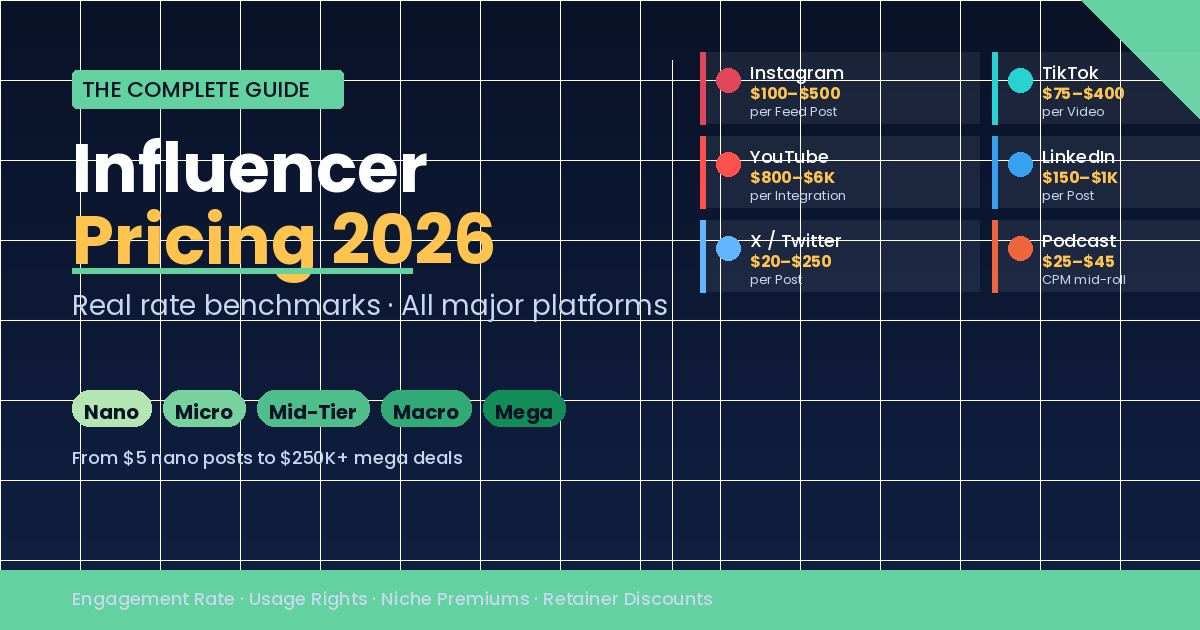
Most brands enter influencer negotiations blind. They guess at rates, get quoted wildly inconsistent numbers, and end up either overpaying or insulting a creator who knows their market value.
Influencer pricing has no public rate card — but it has patterns. After years of running campaigns across platforms, I’ve seen what fair looks like and what a bad deal looks like. Rates vary by platform, content format, audience tier, niche, and usage rights — and all five variables matter.
This guide gives you real, current benchmarks for every major platform in 2026, the factors that move the final price up or down, and the framework brands use to negotiate confidently.
What Actually Determines Influencer Pricing?
Influencer rates are driven by five core variables, and understanding each one prevents you from treating follower count as the only number that matters.
1. Follower Count (Tier) The most commonly used proxy for pricing, divided into five tiers: nano (1K–10K), micro (10K–100K), mid-tier (100K–500K), macro (500K–1M), and mega (1M+). Each tier has its own rate range on every platform.
2. Engagement Rate This is where most brands leave money on the table. Two creators with identical follower counts can command very different rates based on how actively their audience interacts. A 4% engagement rate on Instagram is strong. A 1.2% rate on the same platform is below average and should pull the price down.
3. Niche Finance, B2B tech, health, and legal content consistently command premiums — sometimes 2x the baseline rate — because the audience has higher commercial intent. Lifestyle and general entertainment are priced lower because the audience is broad and conversion rates are typically weaker.
4. Content Type Video costs more than static imagery. Long-form video costs more than short-form. A dedicated YouTube video requires scripting, filming, editing, and revisions — meaningfully more production effort than an Instagram Story.
5. Usage Rights This is the most overlooked line item in influencer deals. If you want to repurpose creator content in paid ads, whitelisted campaigns, or branded channels, expect to pay an additional 50–150% on top of the organic post rate depending on duration and placement.
The rough industry baseline is $100 per 10,000 followers per Instagram static post. Every other platform, content format, and tier is priced relative to that number.
Influencer Pricing by Platform — Full Rate Breakdown
Instagram Influencer Pricing
Instagram is the most established influencer marketing channel, and its pricing benchmarks are the most standardized in the industry. Reels consistently command a 30–50% premium over static feed posts; Stories are the cheapest format but disappear after 24 hours.
| Tier | Followers | Feed Post | Story (per frame) | Reel |
|---|---|---|---|---|
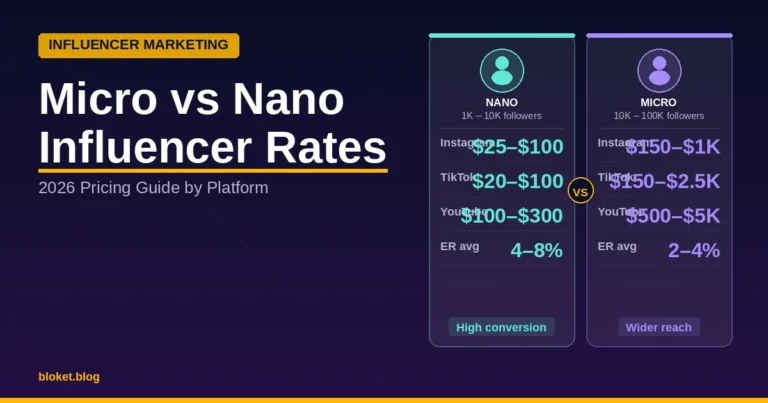
| Nano | 1K–10K | $10–$100 | $5–$25 | $25–$150 |
| Micro | 10K–100K | $100–$500 | $25–$100 | $250–$800 |
| Mid-Tier | 100K–500K | $500–$5,000 | $100–$500 | $1,500–$7,500 |
| Macro | 500K–1M | $5,000–$10,000 | $500–$1,500 | $8,000–$15,000 |
| Mega | 1M+ | $10,000–$50,000+ | $1,500+ | $15,000–$100,000+ |
In my testing across multiple campaigns, micro-influencers (10K–100K followers) consistently deliver the strongest cost-per-engagement. A fitness micro-influencer with 42K followers and a 6.5% engagement rate outperformed a macro account at 380K followers and 1.4% engagement — at less than a fifth of the cost.
The sweet spot for most brands with limited budgets: 5–10 micro-influencers rather than one macro deal. The aggregate reach and engagement rate almost always wins.
TikTok Influencer Pricing
TikTok rates are lower per post than Instagram across most tiers — but that gap is closing as the platform matures and creator rates reflect the production effort required for quality video.
| Tier | Followers | Video Rate |
|---|---|---|
| Nano | 1K–10K | $5–$75 |
| Micro | 10K–100K | $75–$400 |
| Mid-Tier | 100K–500K | $400–$3,000 |
| Macro | 500K–1M | $3,000–$8,000 |
| Mega | 1M+ | $8,000–$80,000+ |
TikTok’s algorithm creates a pricing dynamic unique to the platform: a video from a 60K-follower creator can organically reach 2M viewers with the right hook and timing. That viral potential means some creators — particularly in entertainment and beauty — command rates disproportionate to their follower count.
Spark Ads (promoting an organic creator post as a paid ad) add approximately $200–$700/month in licensing costs on top of the creation fee. If your media strategy includes Spark Ads amplification, factor this into your initial budget discussion with the creator.
TikTok also has the shortest content shelf life of any major platform. Unlike YouTube, a TikTok video rarely generates meaningful views beyond its first 48–72 hours unless it enters a viral cycle. Price accordingly.
YouTube Influencer Pricing
YouTube commands the highest rates per deliverable of any platform, and for good reason. A polished 8–12 minute video with an integration involves scripting, filming, editing, and a revision cycle that can take two to three weeks. The production lift is real.
| Tier | Subscribers | Dedicated Video | 60-Sec Mid-Roll | Shorts |
|---|---|---|---|---|
| Nano | 1K–10K | $200–$800 | $50–$200 | $15–$75 |
| Micro | 10K–100K | $800–$6,000 | $250–$2,000 | $75–$300 |
| Mid-Tier | 100K–500K | $6,000–$20,000 | $2,000–$7,000 | $300–$1,500 |
| Macro | 500K–1M | $20,000–$50,000 | $7,000–$20,000 | $1,500–$6,000 |
| Mega | 1M+ | $50,000–$250,000+ | $20,000+ | $6,000+ |
The 60-second mid-roll integration — a spoken mention within an otherwise organic video — is the most cost-efficient YouTube format for most brands. You get natural creator endorsement inside genuine content at roughly 30–40% of a dedicated video rate.
The most important thing I’ve found about YouTube pricing: content compounds. A video published today can still generate views, clicks, and conversions two or three years from now. That long-tail value fundamentally changes the ROI math compared to a Story that vanishes in 24 hours. If you serve a longer buying cycle — SaaS, education, finance, supplements — YouTube is almost always worth the premium rate.
LinkedIn Influencer Pricing
LinkedIn’s creator ecosystem is smaller than Instagram or TikTok but growing rapidly, particularly for B2B, SaaS, HR, legal, and professional services brands. Pricing reflects the audience’s commercial intent — these are decision-makers and professionals with purchasing authority.
| Tier | Followers | Text/Image Post | Newsletter Feature | Video Post |
|---|---|---|---|---|
| Micro | 5K–50K | $150–$1,000 | $400–$2,000 | $600–$2,500 |
| Mid-Tier | 50K–200K | $1,000–$5,000 | $2,000–$8,000 | $2,500–$10,000 |
| Macro | 200K+ | $5,000–$25,000 | $8,000+ | $10,000+ |
LinkedIn rates per follower run 2–3x higher than Instagram because the audience is professional and conversion potential for B2B products is significantly stronger. A 30K-follower LinkedIn creator in the HR or finance space is a different asset than a 30K Instagram lifestyle account.
LinkedIn Newsletter sponsorships are an underused format in 2026. A creator with a well-read weekly newsletter of 20K subscribers can be more valuable than a viral post, particularly for products that need explanation rather than impulse.
X (Twitter) Influencer Pricing
General brand investment in X has declined since 2023, but the platform retains strong relevance for crypto, finance, tech, politics, and media. Pricing reflects both reduced demand and niche audience concentration.
| Tier | Followers | Single Post | Thread |
|---|---|---|---|
| Micro | 10K–100K | $20–$250 | $100–$600 |
| Mid-Tier | 100K–500K | $250–$2,000 | $600–$4,000 |
| Macro | 500K–1M | $2,000–$8,000 | $4,000–$15,000 |
| Mega | 1M+ | $8,000–$40,000 | $15,000+ |
X performs best for brand awareness in niche professional communities rather than broad consumer marketing. Unless your audience is heavily finance, tech, or media-adjacent, X is rarely the right primary channel for influencer investment.
Pinterest, Podcast, and Newsletter Pricing
Pinterest: Rates are based on monthly viewer counts rather than follower counts, since Pinterest functions more as a search engine than a social network. Strong performance niches: home décor, food, fashion, weddings, DIY, and travel.
| Monthly Viewers | Rate Per Pin |
|---|---|
| Under 100K | $25–$200 |
| 100K–500K | $200–$1,000 |
| 500K–2M | $1,000–$4,000 |
| 2M+ | $4,000+ |
Podcasts: Podcast sponsorships operate on a CPM (cost per thousand downloads) model, making them the most budget-predictable format in influencer marketing.
| Format | CPM Rate |
|---|---|
| Pre-roll (15–30 seconds) | $15–$25 |
| Mid-roll (60–90 seconds) | $25–$45 |
| Host-read episode sponsorship | $40–$80 |
A podcast averaging 40,000 downloads per episode at a $35 mid-roll CPM costs $1,400 per episode. For products that benefit from host endorsement and listener trust — particularly in finance, health, and education — podcast CPMs often outperform social content on a per-conversion basis.
Email Newsletters: Paid newsletter sponsorships are gaining traction as an influencer channel in 2026, particularly for Substack and Beehiiv creators with highly targeted audiences.
| List Size | Sponsored Edition Rate |
|---|---|
| Under 10K subscribers | $100–$500 |
| 10K–50K | $500–$2,500 |
| 50K–200K | $2,500–$10,000 |
| 200K+ | $10,000+ |
What Pushes the Final Price Above the Base Rate
The rate tables above are starting points, not final invoices. Several deal terms consistently add to the base cost.
Exclusivity Asking a creator not to work with competing brands adds roughly 15–25% per 30-day exclusivity window. A 90-day exclusivity clause on a mid-tier Instagram deal could add $500–$2,000 to the base fee alone.
Usage Rights for Paid Media If you want to run a creator’s content as a paid social ad on Meta, Google, or programmatic platforms, expect a 50–150% surcharge on the organic rate, scaled by duration. A 6-month paid media license costs more than a 30-day one.
Whitelisting Running paid ads directly through the creator’s social handle (not your brand account) adds approximately $200–$700/month on top of the content creation fee. Whitelisted ads typically perform better than brand-account ads because they appear as organic creator content.
Rush Turnaround Requesting content delivery in under 7 business days typically triggers a 20–30% rush fee. Build lead time into your campaign calendar to avoid this.
Additional Revision Rounds Most creators include one revision round in the base fee. Each additional round is typically billed at $50–$300 depending on tier, so be thorough in your brief before content goes into production.
Bundled Deliverables Packaging multiple deliverables (e.g., one Reel + three Stories + one feed post) usually reduces the per-unit cost by 10–20%. Long-term retainer agreements (3+ months) typically offer 15–25% lower per-deliverable rates than individual one-off deals.
How Engagement Rate Changes What You Should Pay
The single most common budget mistake is negotiating on follower count while ignoring engagement rate. A 200K-follower account with 0.9% engagement is not a 200K-follower account — it’s an audience that has largely tuned out.
2026 Engagement Rate Benchmarks by Platform:
| Platform | Below Average | Average | Strong | Exceptional |
|---|---|---|---|---|
| TikTok | <3% | 3–6% | 6–10% | 10%+ |
| <1% | 1.5–3.5% | 3.5–6% | 6%+ | |
| YouTube | <1% | 2–4% | 4–6% | 6%+ |
| <0.5% | 1–3% | 3–5% | 5%+ | |
| X | <0.3% | 0.4–1% | 1–2% | 2%+ |
A creator with double the average engagement for their platform justifies roughly a 20–30% rate premium — not double the rate. The relationship between engagement rate and value is real, but not linear.
Before agreeing to any rate, request engagement data for the last 90 days across at least five to ten posts. Also look at the comments themselves. Genuine engagement looks like questions, personal responses, and debate. Purchased engagement looks like generic phrases, unrelated comments, and emoji clusters from accounts with no profile pictures.
Common Myths That Cost Brands Money
Myth 1: Bigger audiences always mean better results. A 2M-follower account in the wrong niche for your product almost never outperforms a 40K-follower account with a tightly aligned audience. Reach without relevance is waste.
Myth 2: You can negotiate down 50%. Top micro and mid-tier creators know their market rate. Trying to cut it in half signals inexperience and often results in reluctant, low-effort content. A 10–20% negotiation is realistic on a first deal; going further damages the relationship before it starts.
Myth 3: High engagement guarantees conversions. Engagement rate and conversion rate are correlated but not the same. A creator with highly engaged fans who love their personality doesn’t automatically convert that love into purchases. Always ask for past brand campaign results — not just engagement statistics — before signing.
Myth 4: One post is enough. Single-post influencer deals rarely generate meaningful, sustained ROI. Studies consistently show that repeated audience exposure to a brand message — ideally through the same trusted creator over 60–90 days — drives significantly stronger conversion than a single touchpoint. Budget for campaigns, not moments.
Myth 5: Follower count determines audience quality. Two accounts with 100K followers can have completely different audience demographics, purchase intent, and platform behavior. Always request an audience demographic breakdown before committing to a deal, particularly for age distribution, geography, and gender split.
Frequently Asked Questions
How much does a sponsored Instagram post cost in 2026? Instagram sponsored post rates range from $10–$100 for nano influencers (1K–10K followers) to $10,000–$50,000+ for mega influencers above 1M followers. Reels cost 30–50% more than static posts. For most brands, micro-influencer posts at $100–$500 offer the best cost-per-engagement ratio and are the most budget-efficient starting point.
What is the average cost of a TikTok influencer post? TikTok video rates range from $5–$75 for nano creators (1K–10K followers) up to $8,000–$80,000+ for mega-tier creators. Rates are generally lower than Instagram per post but rising as the platform matures. Budget separately for Spark Ads licensing if you plan to run paid amplification on top of organic content.
Are YouTube sponsorships worth the high cost? YouTube commands the highest per-deliverable rates in the industry, but its content generates compounding value — videos stay indexed and searchable for years. For brands in SaaS, education, finance, or health, where purchase decisions take time, YouTube integrations frequently deliver stronger long-term ROI than faster-fading social content on other platforms.
How do I calculate a fair influencer rate? Start with the $100 per 10,000 followers baseline for an Instagram static post. Adjust upward for above-average engagement rates, video content, usage rights, exclusivity, or strong niche alignment. Adjust downward for below-average engagement, broad or misaligned niches, or multi-deliverable packages. Apply platform multipliers: YouTube runs 5–10x the Instagram baseline per deliverable; LinkedIn runs 2–3x; TikTok runs roughly 0.5–0.8x.
Is it more cost-effective to work with micro or macro influencers? Micro-influencers (10K–100K followers) are considerably cheaper per post and consistently deliver higher engagement rates and stronger audience trust than macro accounts. Most campaign data supports splitting a fixed budget across multiple micro-influencers rather than concentrating it in one macro deal — the combined reach and conversion performance is typically superior.
What does usage rights cost on top of an influencer rate? Usage rights for paid media typically add 50–150% to the organic content rate, depending on how long and where you plan to run the content. Whitelisting — running ads through the creator’s handle specifically — costs an additional $200–$700/month. Always clarify rights in the contract before production begins, not after.
How does podcast influencer pricing compare to social media? Podcast sponsorships use a CPM model ($15–$80 per 1,000 downloads) rather than flat fees, making budgeting more predictable. A mid-roll slot on a 40,000-download podcast at $35 CPM costs $1,400 per episode. For brands that need trusted, longer-format explanation of a product — particularly in finance, wellness, or tech — podcast CPMs frequently outperform social post rates on a per-conversion basis.
Should long-term influencer partnerships be priced differently? Yes, and most experienced marketers structure it that way. Long-term retainer agreements (typically 3–6 months) justify a 15–25% discount per deliverable because the creator is committing volume and reducing your deal-sourcing overhead. They also produce better content as the creator develops genuine familiarity with the brand. Retainer deals are almost always preferable to repeated one-off negotiations with the same creator.
Conclusion
Influencer pricing by platform in 2026 has enough market precedent to negotiate from a position of knowledge — not guesswork.
The core principle is simple: pay for attention quality, not attention volume. A tightly aligned creator with 35K followers and a 7% engagement rate in your exact category is worth more than a 400K account with 1.1% engagement and a general lifestyle audience.
Use the rate tables in this guide as your negotiation anchor points — not fixed prices, but informed baselines. Every deal has variables. Your job is to know which variables move the price, in which direction, and by how much.
Get inspired by thought-provoking articles—find fresh insights and actionable tips.