Brands get burned by influencer pricing more than almost any other marketing line item. The rate sheets don’t exist publicly, nobody posts their prices, and the advice circulating online is mostly based on 2022 data or a sample of five creators someone found on Instagram.
This guide gives you real 2026 rate ranges across every major platform, a direct comparison of nano and micro influencer pricing, and a clear framework for deciding which tier actually fits your campaign. No filler, no vague averages.
What Counts as a Nano vs Micro Influencer?
Nano influencers have between 1,000 and 10,000 followers. Micro influencers have between 10,000 and 100,000. That follower gap drives almost everything: pricing, engagement rates, content quality, and how much campaign management time you’ll spend per dollar.
Nano influencers are usually genuine enthusiasts. A home baker with 7,000 Instagram followers. A personal finance TikTok account with 5,500 followers built through consistent posting over two years. Their audiences are small but close. People actually read captions. Comments are real conversations.
Micro influencers sit in the middle ground between nano creators and the mid-tier (100K to 1M). They’ve built enough of an audience to charge meaningfully for their time, but many still feel more like a trusted voice than a brand mouthpiece. A skincare micro influencer with 60,000 engaged followers can still drive real purchase decisions in a way that mid-tier creators often can’t.
Worth noting: the tier definitions aren’t universal. Some agencies define nano as under 5,000 and micro as 5K to 50K. This guide uses the most widely cited breakdown from Influencer Marketing Hub’s 2025 creator economy report: nano = 1K to 10K, micro = 10K to 100K.
How Much Do Nano Influencers Charge in 2026?
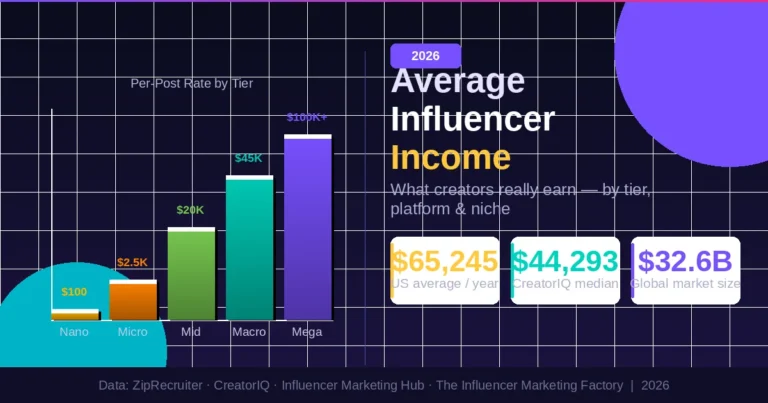
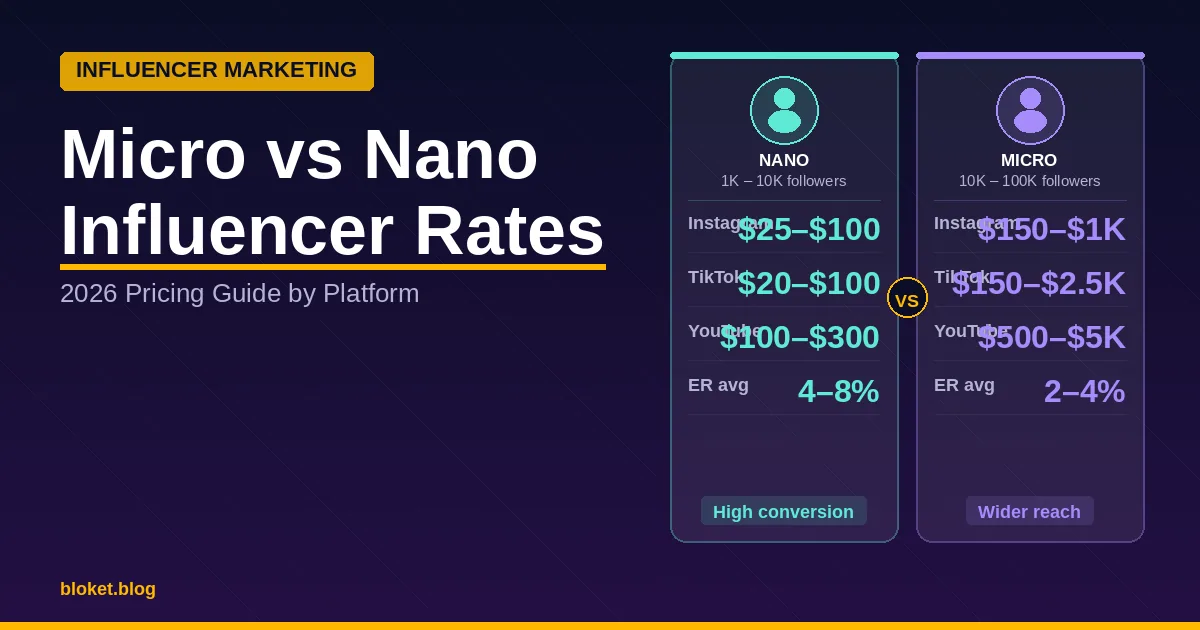
Nano influencer rates in 2026 run from $10 to $200 per deliverable, depending on platform, niche, and content format. On Instagram, most nano creators charge between $25 and $100 for a single feed post.
| Platform | Content Type | Typical Nano Rate |
|---|---|---|
| Feed Post | $25 – $100 | |
| Story (3 slides) | $10 – $50 | |
| Reel | $50 – $150 | |
| TikTok | Video | $20 – $100 |
| YouTube | Dedicated Video | $100 – $300 |
| YouTube | 30–60s Integration | $50 – $150 |
| Blog / Newsletter | Sponsored Post | $50 – $200 |
YouTube rates are higher even at the nano tier because video production takes genuine effort. A creator with 5,000 subscribers is still spending hours on scripting, filming, and editing. Brands get more than a caption, and the rate reflects that.
TikTok nano rates have softened slightly since 2024 as the platform filled with creators. That said, TikTok’s algorithm doesn’t penalize small accounts the way Instagram’s does. A 6,000-follower TikTok creator can hit 50,000 views on a good post. That’s real reach for $50 to $100.
One thing I’ve seen consistently when reviewing nano influencer deals: most nano creators don’t have a formal rate card. They quote based on what they think the brand will pay. If you reach out with a clear brief and a fair offer in the first message, you get cleaner responses and often better rates than if you ask “what are your rates?” and wait.
How Much Do Micro Influencers Charge in 2026?
Micro influencer rates in 2026 typically run from $150 to $2,500 per deliverable, with Instagram feed posts averaging around $300 to $700 in competitive niches. The range is wide because a 12,000-follower account and a 95,000-follower account both technically qualify as micro.
| Platform | Content Type | Typical Micro Rate |
|---|---|---|
| Feed Post | $150 – $1,000 | |
| Story (3 slides) | $75 – $400 | |
| Reel | $200 – $2,000 | |
| TikTok | Video | $150 – $2,500 |
| YouTube | Dedicated Video | $500 – $5,000 |
| YouTube | 30–60s Integration | $200 – $2,000 |
| Blog / Newsletter | Sponsored Post | $200 – $2,000 |
The jump from $150 to $1,000 for a single Instagram post isn’t random. Several factors push the number up or down within that range:
Audience quality is probably the biggest one. An 80,000-follower account built organically over four years in a tight niche commands a different rate than 80,000 followers assembled through giveaway loops. Savvy micro influencers know this, and the ones with genuinely loyal audiences price accordingly.
Engagement rate also moves the number. A micro influencer with 40,000 followers and a 5% engagement rate on Instagram is doing better than the platform average of around 1.5% to 2%, and they know it.
In my experience reviewing creator media kits across beauty, fitness, and personal finance, I’ve seen micro influencers with 35,000 followers charge more per post than creators with 200,000. Niche matters more than follower count once you’re past 10,000 followers.
Nano vs Micro Influencer Rates: Side-by-Side Comparison
The most useful comparison isn’t cost per post. It’s cost per engagement and reach efficiency.
| Factor | Nano (1K – 10K) | Micro (10K – 100K) |
|---|---|---|
| Avg. Engagement Rate (Instagram) | 4% – 8% | 1.5% – 4% |
| Avg. Engagement Rate (TikTok) | 6% – 12% | 3% – 7% |
| Instagram Post Rate | $25 – $100 | $150 – $1,000 |
| TikTok Video Rate | $20 – $100 | $150 – $2,500 |
| YouTube Dedicated Video | $100 – $300 | $500 – $5,000 |
| Content Quality | Variable | Generally higher |
| Professional Workflow | Varies widely | More consistent |
| Exclusivity Flexibility | High | Moderate |
| Best Campaign Fit | Conversions, trust | Awareness, scale |
The cost-per-engagement math favors nano. If a nano creator charges $50 for a post and generates 500 engagements from their 7,000 followers (about 7% ER), that’s $0.10 per engagement. A micro influencer charging $400 with 3% engagement on 40,000 followers generates 1,200 engagements: $0.33 per engagement.
But that math has a ceiling. Reach matters too. A single micro influencer reaches 40,000 people for $400. Getting equivalent reach from nano influencers means coordinating 20 different creators, and campaign management time isn’t free. The “nano is always better” logic breaks down when you start calculating your own time as a cost.
According to Aspire’s 2024 Creator Economy Report, nano influencer campaigns in lifestyle and wellness verticals averaged a 6.7% conversion rate, compared to 3.2% for micro campaigns in the same categories. But micro influencer campaigns in the same study showed 4.2x higher total reach per dollar of spend. Both numbers can be true at the same time: nano converts better per engagement, micro distributes better per dollar when reach is the goal.
Which Tier Delivers Better ROI for Your Budget?
Nano influencers typically win on cost per engagement and conversion rate. Micro influencers typically win on reach efficiency and content quality. Which one delivers better ROI depends entirely on what you’re measuring.
If conversions are the goal, link clicks, promo code redemptions, or direct sales, nano and micro both work, but nano tends to perform better in categories where trust drives the purchase decision. Supplements, skincare, parenting products, financial tools. These categories rely on the audience actually believing the recommendation. Nano audiences are more likely to believe it.
If brand awareness is the goal, micro influencers pull ahead. Their content quality is more reliable. A single campaign with eight micro influencers can generate 300,000 to 600,000 impressions without coordinating 40 different nano creators. For product launches where the first 30 days of exposure matter, that reach efficiency is worth the higher rate.
For brands spending under $5,000 per month on influencer marketing, here’s how I’d think about it:
- Local campaigns or niche products where community trust is everything: go nano. The per-post rate is low, the trust factor is genuine, and the CPE math works in your favor.
- New product launches needing broad awareness quickly: go micro. The higher rate buys reach you can’t replicate at scale with nano.
- Ongoing ambassador or UGC programs: mix both tiers. Nano creators for volume and authentic content, micro for the anchor posts that reach larger audiences.
What Factors Push Influencer Rates Up or Down?
Influencer rates are not fixed. The same creator can quote $100 to one brand and $500 to another based on factors that shift pricing significantly across both the nano and micro tiers.
Niche and audience purchase intent. Finance, B2B SaaS, and luxury goods creators charge more than food or general lifestyle creators at the same follower count. Their audiences have higher income and higher purchase intent per conversion. The creator knows this.
Usage rights. If you want to repurpose content in paid ads, on your website, or in third-party marketing materials, expect to pay 25% to 100% more than the base post rate. Creators are increasingly aware that their content has value beyond the initial post. Most now include usage rights as a separate line item, and they’re right to.
Exclusivity periods. Asking a fitness influencer not to work with any competing supplement brand for 60 days after posting costs extra. Longer exclusivity windows mean higher fees. Be specific about what you need. Vague “exclusivity” language in briefs leads to confused negotiations and inflated quotes.
Turnaround time. Needing a post live within 72 hours is common for campaign launches or reactive opportunities. Rushing a creator typically adds 20% to 30% to the rate. If the timeline is tight, say so upfront rather than springing it after the quote is accepted.
Platform performance signals. A nano TikTok creator with consistent 25,000-view averages on their last 10 videos can charge closer to mid-micro rates on TikTok specifically, even with only 6,000 followers. Algorithm reach, not just follower count, is how serious creators price TikTok work.
Seasonality. Q4 (October through December) is the most competitive window in influencer marketing. Both nano and micro rates typically rise 20% to 40% during the holiday run-up as brand budgets flood in. Book early or build the premium into your Q4 budget from the start.
Common Mistakes Brands Make When Comparing Influencer Rates
The biggest mistake isn’t overpaying. It’s comparing rates without comparing context.
Comparing follower count instead of engagement rate. A 50,000-follower account with 0.7% engagement is a worse buy than a 12,000-follower account with 6% engagement, even if the micro creator charges twice as much. Run the CPE math before accepting or rejecting any quote.
Forgetting about content licensing fees. Many brands pay the agreed post rate and assume they own the content outright. The creator then finds their content running in a Facebook ad with no licensing agreement. Factor rights into every deal from the start. It saves a lot of difficult conversations later.
Expecting nano rates to stay nano forever. If you find a creator with 8,000 genuinely engaged followers in your exact niche who charges $60 per post, that account is probably growing. Locking them into a longer-term partnership, say six posts over six months, while they’re still in the nano tier is a good move for both sides.
Skipping the brief. Vague briefs produce vague content and rate disputes. Before closing any deal, define in writing: how many posts, which platforms, what format, approximate caption length, whether Stories are included, approval rounds, and the deadline. Ambiguity costs more than the original post rate once revisions and disputes start.
Paying for reach in categories where trust matters more than scale. Health products, personal finance tools, parenting content: these perform better with a nano influencer their audience actually trusts than with a 200,000-follower micro creator who posts ten sponsored items a month and whose audience has developed a tolerance for it.
Frequently Asked Questions
How much do nano influencers typically charge per post in 2026?
Most nano influencers charge between $25 and $150 per Instagram post. TikTok video rates run slightly lower, typically $20 to $100. Rates shift based on niche, content format, and whether usage rights are included. Many nano creators will accept product-only compensation for lighter deliverables like Stories, but cash is still expected for feed posts and Reels.
Are micro influencers worth the higher rates compared to nano?
Micro influencers justify the premium when reach and polished content quality matter. They produce more consistent output, manage brand communication more professionally, and can touch a much larger audience per deal. For conversion-focused campaigns in niche categories, nano creators often deliver a better cost per sale. It depends what you’re actually trying to achieve.
What is a fair TikTok rate for a nano influencer?
A fair range for nano TikTok creators in 2026 is $20 to $100 per video. The upper end applies to creators in high-value niches (finance, health, tech) with strong average view counts. A nano account averaging 15,000 views per video in a finance niche can reasonably charge $80 to $100 even with only 5,000 followers, because the algorithm reach outweighs the follower count.
Do Reels cost more than static posts for both tiers?
Yes, consistently. Nano Reel rates run $50 to $150, while micro Reels start around $200 and can reach $2,000 for creators with strong video performance metrics. The rate premium for video over static content is generally 1.5x to 2.5x at both tiers, reflecting the production time involved.
Can you negotiate influencer rates?
You can, and most creators expect some back-and-forth. The most effective approach is not to push the rate down directly but to offer something else of value. Multi-post packages, long-term ambassador agreements, or affiliate structures with performance bonuses often lead to better rates per deliverable without the awkward low-ball conversation.
How do I know if an influencer’s quoted rate is fair?
Check the rate against expected engagement output. For Instagram, a rough benchmark for reasonable pricing: aim to pay no more than $0.25 to $0.50 per engagement for nano influencers, and $0.30 to $0.60 for micro. Ask to see their average engagement stats from the last 30 to 60 days before accepting a quote. Any creator serious about brand partnerships will have this data ready.
What can a $1,000 influencer marketing budget realistically achieve?
With $1,000, nano influencers give you more coverage than micro. You can run 8 to 15 posts across different creators in a specific niche instead of one or two micro influencer posts. For local businesses, niche e-commerce brands, or products where community trust matters, spreading the budget across nano creators typically outperforms concentrating it on a single micro influencer post.
What to Do Next
Nano and micro influencer rates both make sense depending on what your campaign needs.
If you’re targeting conversions in a trust-sensitive category, nano influencers at $25 to $150 per post will outperform pricier micro options on a cost-per-sale basis more often than not. If you need content that looks polished, reaches a large audience in a single campaign push, and gives you usable creative for paid amplification, micro influencers at $300 to $1,000 per deliverable earn their rate.
The error is making the decision based only on follower count and price. Check engagement rates. Define deliverables before any agreement is signed. Account for usage rights from the start. And if you find a nano influencer with a tight, loyal community in your exact niche, move quickly. Those accounts don’t stay nano for long.
Open your mind to new angles—our featured content offers something meaningful for every reader.