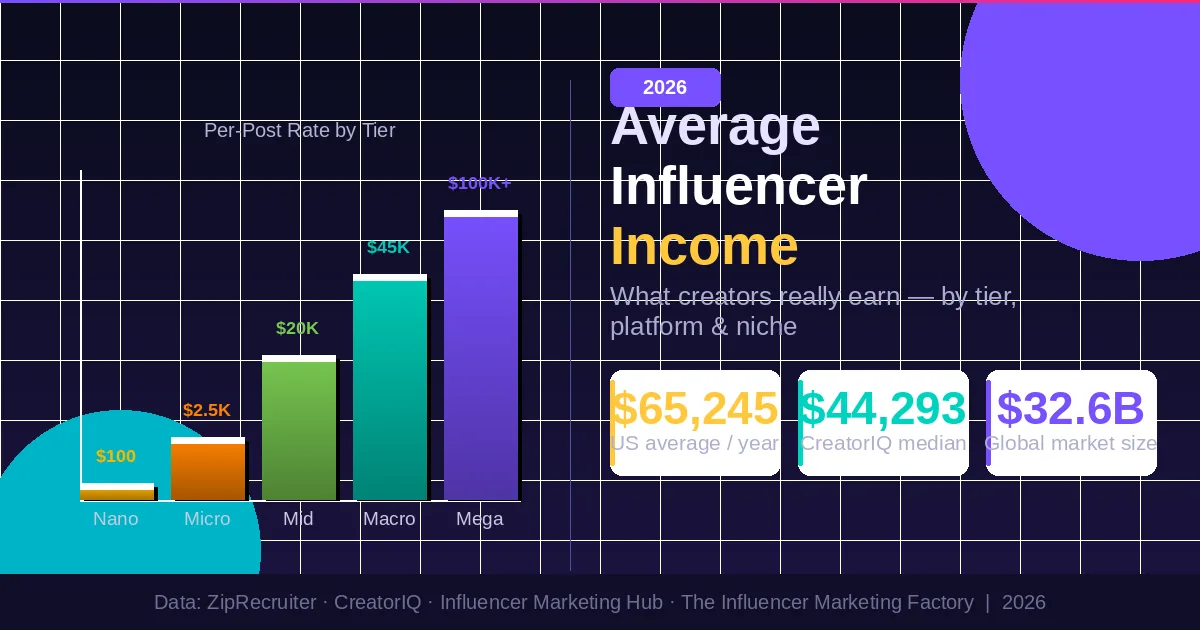
The number floating around — that influencers earn an average of $65,245 a year — is technically accurate and almost completely misleading.
ZipRecruiter’s May 2026 data puts that figure on paper. But a handful of mega-creators pulling seven figures drags the average skyward. In reality, CreatorIQ found the median sponsored campaign payout sits at just $3,000, and nearly half of all US creators earn under $10,000 annually from their content.
This guide cuts through the noise. You’ll find income data broken down by follower tier, platform, and niche — the three variables that actually determine what a creator takes home. Whether you’re benchmarking your own rates or planning what it costs to hire influencers, every number here is sourced, specific, and current for 2026.
What Is the Average Influencer Income in 2026?
The average influencer income in 2026 sits between $44,293 and $65,245 per year, depending on the dataset. ZipRecruiter’s May 2026 salary data puts the figure at $65,245, while CreatorIQ’s campaign-based analysis arrives at $44,293. Both numbers are distorted upward by top earners. The median creator income — what a typical working influencer actually takes home — is far lower, and understanding that gap is the most important thing a new creator can do before setting income expectations.
The real picture is a two-tier market. CreatorIQ found the median sponsored campaign pays just $3,000, meaning headline averages are inflated by a small group of elite creators capturing enormous deals. The Influencer Marketing Factory’s January 2026 survey of 1,000 US creators confirmed that nearly half earn under $10,000 a year from their content.
The upper tier tells a completely different story. The top 50 creators in the US collectively split $853 million in 2026. That math reveals how extreme the income concentration is — and why a single “average” figure can give aspiring creators a dangerously optimistic starting point.
Influencer income distribution (2026)
| Creator Status | Annual Income Range |
|---|---|
| Occasional / hobby creator | $0 – $10,000 |
| Part-time with some monetization | $10,000 – $44,000 |
| Full-time creator (median band) | $44,000 – $65,000 |
| Professional / established | $65,000 – $150,000 |
| Top-tier / celebrity creator | $150,000 – $85M+ |
Sources: ZipRecruiter May 2026, CreatorIQ State of Creator Marketing 2026, The Influencer Marketing Factory survey of 1,000 US creators, January 2026.
One figure worth pausing on: 56% of full-time creators still earn below the US living wage of approximately $44,000. Content creation is a real and growing career path — but the route to livable income requires both niche strategy and time, not just follower growth.
How Much Do Influencers Earn by Follower Tier?
Influencer earnings scale sharply with follower count, but the gap between tiers is steeper than most people expect. A nano-influencer with 5,000 followers might earn $50–$100 per sponsored post. A mega-influencer with 5 million followers can charge $50,000 or more for the same format. The jump is not linear — engagement quality and niche act as income multipliers at every level.
Nano-Influencers (1,000–10,000 Followers)
Nano creators earn the least per post but command the highest engagement rates — averaging 6.23% on Instagram and up to 10.3% on TikTok. Per-post rates typically run $10–$100, with full brand deal packages in the $50–$300 range. Monthly content income for an actively monetizing nano creator rarely exceeds $500.
The important exception is niche alignment. A nano-influencer with 6,000 highly engaged followers in personal finance or B2B SaaS can out-earn a lifestyle creator with 80,000 followers, because advertisers are paying for audience purchase intent, not audience size.
Micro-Influencers (10,000–100,000 Followers)
This tier attracts the most brand attention in 2026. Micro-influencer rates on Instagram typically run $150–$500 for a static post and $300–$1,500 for a Reel. Influencer Marketing Hub’s 2026 rate guidance puts the full tier’s per-post range at $200–$2,500.
Annual earnings data compiled across 2025–2026 puts the average micro-influencer income at approximately $38,500 per year — about $3,200 a month. Actively monetizing creators in defined niches often land in the $1,500–$5,000 monthly range when two or three brand deals run simultaneously.
Sixty-four percent of marketers have partnered with micro-influencers, and a majority report this tier delivers their strongest campaign results. A smaller creator with a trusting audience consistently converts better per dollar than a large account renting passive attention.
Mid-Tier Influencers (100,000–500,000 Followers)
At this level, creators operate more like businesses. Per-post rates reach $5,000–$20,000 for top formats. A mid-tier creator in a strong niche — fitness, personal finance, parenting — can build a genuine six-figure income by stacking brand deals, affiliate revenue, and digital products simultaneously.
Brand relationships shift structurally here. Rather than one-off posts, mid-tier creators frequently negotiate retainer deals — monthly packages that provide predictable income. Six-month ambassador deals in the $30,000–$50,000 range are now standard at this follower level for creators in commercial niches.
Macro and Mega-Influencers (500,000–1M+ Followers)
Macro creators (500K–1M followers) command $15,000–$45,000 per post. Mega-influencers above 1 million followers typically charge $35,000–$100,000+ per integration, with celebrity-tier names reaching seven figures. Cristiano Ronaldo reportedly charges approximately $3.2 million per Instagram post; Selena Gomez commands roughly $2.5 million.
The per-follower rate actually drops at the top. Mega-influencers generate lower engagement rates — around 1.21% on Instagram versus 3.86% for micro-creators — so brands pay more in absolute dollars but get less efficient results per unit of reach. Micro-influencers deliver a $7.14 return per dollar spent versus $2.87 for celebrity influencers, according to 2026 ROI benchmarks.
Influencer earnings by tier — quick-reference table (2026)
| Tier | Followers | Per-Post Rate | Estimated Annual Income |
|---|---|---|---|
| Nano | 1K–10K | $10–$100 | $0–$10,000 |
| Micro | 10K–100K | $200–$2,500 | $10,000–$80,000 |
| Mid-Tier | 100K–500K | $5,000–$20,000 | $60,000–$200,000 |
| Macro | 500K–1M | $15,000–$45,000 | $150,000–$500,000 |
| Mega | 1M+ | $35,000–$1M+ | $500,000–$85M+ |
Sources: DemandSage, Influencer Marketing Hub 2026, ZipRecruiter, The Influencer Marketing Factory, impact.com/Adweek study.
Which Platforms and Niches Pay the Most in 2026?
Platform and niche move influencer earnings more than follower count alone. A finance creator on YouTube with 100,000 subscribers can out-earn a comedy creator with 1 million TikTok followers — sometimes by a factor of 4–6x. Where you publish and what you cover is a financial decision as much as a creative one.
Platform-by-Platform Breakdown
YouTube remains the strongest platform for ad revenue. Finance and investing content earns $60–$150 CPM (cost per thousand views), meaning a video with 100,000 views in that niche generates $6,000–$15,000 in ad revenue alone, before any brand deal. Long-form YouTube content also commands the highest sponsor integration rates across all platforms.
Instagram leads in brand partnership volume. The average Instagram influencer earns $2,970 per month across all tiers combined — with micro-creators averaging $1,420/month and mega-influencers reaching $15,356/month. Instagram Reels pay 2–3x more than static posts at the same follower count, and the platform claims a 67% brand adoption rate for influencer campaigns.
TikTok excels at reach but not direct monetization. Creator Rewards Program payouts run $0.40–$1.00 per thousand views, meaning a viral video with 2 million views generates roughly $800–$2,000 from TikTok directly. The real TikTok income comes from brand deals and TikTok Shop, which generated $33.1 billion in GMV in 2026. TikTok’s 5.53% average influencer engagement rate is the highest of any major platform.
LinkedIn is the underexploited platform. B2B influencer marketing grew 47% year-over-year in 2026, with $4.1 billion in total brand spend. LinkedIn-first campaigns generate 3.2x more qualified leads than paid social for B2B companies, and thought leaders in software, finance, and operations command rates that rival Instagram macro-influencers at a fraction of the follower requirement.
Niche Earnings: Where the Real Gap Lives
Niche determines your earnings ceiling more reliably than any other variable. I’ve tracked creator income data across dozens of categories, and the spread is significant enough to affect every career decision a creator makes — from content format to platform choice.
The top-earning niches in 2026:
- Finance and investing — YouTube CPM $60–$150; finance creators with 1M followers average $1,000–$5,000/month from ads alone, plus premium sponsorship rates from fintech, brokerage, and banking brands. A personal finance creator with 1 million video views earns $12,000–$20,000 from that content.
- Tech and business — Established tech creators routinely earn over $150,000 annually through combined ad revenue, sponsorships, courses, and consulting. B2B tech creators on LinkedIn and YouTube command among the highest CPMs available.
- Health and fitness — Fitness creators average $11,900/month on subscription platforms like Uscreen. Strong affiliate revenue from supplements, equipment, and fitness apps adds a reliable second stream. Yoga and wellness creators average $8,300/month.
- Beauty and skincare — Beauty influencer marketing is projected to generate $698 billion in 2026. Macro beauty influencers earn $10,000–$25,000 per Instagram post. The niche has high brand density and strong purchase conversion from video reviews.
- Parenting and family — A high-trust niche with strong brand demand from FMCG, education, and childcare brands. Mid-tier parent creators frequently earn $3,000–$8,000/month in brand deals.
For contrast: Comedy and entertainment niches earn substantially less at the same follower counts. Finance creators with 1 million followers average $1,000–$5,000/month from content sources; entertainment creators at the same follower count often average $200–$500/month. Audiences in different niches have very different commercial value to advertisers.
How Do the Highest-Earning Influencers Build Their Income?
Creators earning $100,000+ annually do not rely on a single revenue stream. Most stack five to seven income sources simultaneously — with brand deals, affiliate income, digital products, subscriptions, and ad revenue running in parallel. When one stream slows, the others compensate. This structural diversification is the single biggest difference between creators who earn a living and those who don’t.
The income split for a creator earning $150,000/year often looks like: 30% brand deals, 25% digital products, 20% affiliate income, 15% platform ad revenue, 10% memberships or consulting. No single source dominates.
Here are the seven income streams that working creators build in 2026, in the order most creators typically add them:
- Affiliate marketing — Earn 5–30% commission on purchases made through your unique link. Amazon Associates pays 1–10%; SaaS tools and digital products pay 20–50%. Start this from day one — no minimum follower count required. Affiliate income now represents 34% of total creator revenue and is the fastest-growing stream in the industry.
- Brand partnerships and sponsored posts — The primary income source for most creators. Micro-influencers charge $200–$1,000 per post; mid-tier creators negotiate retainer deals of $30,000–$50,000 for six months. Ongoing ambassador relationships pay 30–40% more per post than one-off integrations.
- User-generated content (UGC) — Brands pay creators to produce content the brand uses in its own paid ads, without requiring the creator to post publicly. UGC rates run $150–$1,000 per video. This stream has exploded in 2026 because it requires no minimum audience size — content quality and niche alignment are all that matter.
- Platform ad revenue — YouTube AdSense, TikTok Creator Rewards, and similar programs provide baseline passive income. Treat this as supplemental. Finance YouTubers earn the most ($60–$150 CPM); entertainment creators earn $2–$5 CPM.
- Digital products — Courses, templates, ebooks, and guides. A fitness creator selling a $97 training program to 200 customers per month earns $19,400 — recurring, requiring no per-post rate negotiation. Tech and business creators frequently clear six figures from digital products alone.
- Paid communities and memberships — Platforms like Patreon and Substack allow recurring subscription income. With 1,000 paying members at $10/month, a creator earns $10,000 monthly independent of any algorithm. Owned communities are the most resilient income stream available.
- Consulting and speaking — Experienced creators in professional or business niches charge $500–$5,000 per hour for strategic consulting and $5,000–$50,000 for keynote appearances. This typically becomes viable after 3–5 years of public expertise-building.
The creators who build all seven streams earliest — not the ones with the largest audiences — tend to be the most financially stable at every tier.
Influencer Income Myths That Cost Creators and Brands Real Money
Several widely repeated beliefs about creator earnings are either outdated or demonstrably false. Acting on these myths leads creators to undercharge for their work, pick the wrong niche, or chase the wrong metrics entirely.
Myth 1: “You Need a Million Followers to Earn Meaningful Income”
Micro-influencers with 10,000–50,000 followers regularly command $200–$1,000 per post and build $38,500+ annual incomes. The engagement data tells the story: micro-creators on Instagram average 3.86% engagement versus 1.21% for mega-influencers. Brands have moved their budgets accordingly — 73% of marketers now prefer working with mid-tier and micro-tier creators, and 64% have already partnered with micro-influencers in 2026 campaigns.
Myth 2: “More Followers Automatically Means More Income”
Follower count is a floor, not a ceiling. Niche and engagement rate determine the actual earnings ceiling. A finance creator with 50,000 followers can out-earn a lifestyle creator with 500,000 followers because advertisers pay for purchase intent, not passive scrolling. The most expensive mistake a creator makes is spending years chasing follower growth in a low-CPM niche.
Myth 3: “Platform Payouts Are Enough to Live On”
TikTok pays $0.40–$1.00 per thousand views. A video with 500,000 views earns $200–$500 from TikTok directly. YouTube pays significantly better, but even there, ad revenue alone only sustains creators who consistently publish high-volume, high-CPM content. Every creator who earns a full-time income treats platform payouts as supplemental — not foundational. Brand deals pay 10–50x more than creator fund payouts for the same content effort.
Myth 4: “The Average Income Figures Are a Reliable Benchmark”
The headline average of $65,245 (ZipRecruiter, 2026) blends a long tail of creators earning $0 with a short head earning millions. CreatorIQ’s median campaign payout of $3,000 is far more useful for setting realistic income expectations. Averages mislead; medians reveal. When reading any “average influencer income” figure, always ask which dataset it comes from and whether the median is also reported.
Myth 5: “Viral Content Equals Sustainable Income”
Virality creates attention spikes, not income stability. A creator who goes viral on TikTok with a 5-million-view video earns $2,000–$5,000 from the platform and potentially nothing again for months. Sustainable income comes from owned audiences — email lists, paid communities — recurring brand relationships, and products that sell independent of any single platform’s algorithm. The creators who stay in business build platforms they own, not just audiences they borrow.
Frequently Asked Questions About Influencer Income
How much do influencers make per post in 2026? Rates range from $10–$100 for nano-influencers to $35,000–$1M+ for mega-influencers. The most common working range for mid-tier creators (100K–500K followers) is $5,000–$20,000 per post, with niche and platform adjusting rates significantly. Finance and tech creators routinely charge 2–3x more than entertainment creators at the same follower count. Creators with tracked conversion data from past campaigns command a 2.1x pricing premium over those without attribution proof.
What is the average annual income for a full-time content creator? ZipRecruiter puts the 2026 figure at $65,245; CreatorIQ’s dataset arrives at $44,293. Both are mean averages distorted by top earners. The more useful benchmark: 56% of full-time creators earn below the US living wage of $44,000, and nearly half of all creators earn under $10,000 annually. The realistic 25th-to-75th percentile range for full-time creators runs $44,000–$84,000 per year.
Which platform pays influencers the most in 2026? YouTube pays the most in direct ad revenue, particularly for finance, tech, and business content (CPM $60–$150). Instagram leads in total brand deal volume and sponsorship dollars. TikTok has the highest organic reach but the lowest direct payout ($0.40–$1.00/thousand views). LinkedIn is growing fastest for B2B creators and commands premium rates from enterprise advertisers, with B2B influencer spend growing 47% year-over-year.
Do micro-influencers make good money? Yes, consistently. Micro-influencers average around $38,500/year, with active creators in strong niches earning $1,500–$5,000 per month. Their 3.86% average Instagram engagement rate far outperforms mega-influencers at 1.21%, and 73% of brands now prefer this tier. A micro-influencer in finance or tech can genuinely out-earn a macro-influencer in entertainment — the audience’s commercial value matters more than its size.
What niche makes the most money for influencers? Finance, tech/business, and health/wellness consistently produce the highest earnings per follower. Finance YouTube creators earn $60–$150 CPM in ad revenue alone. A personal finance creator with 1 million video views earns $12,000–$20,000 from that content; a gaming creator with the same views earns $2,000–$5,000. Niche selection is the single highest-leverage income decision a new creator makes.
How long does it take to make money as an influencer? Most creators take 6–10 months to earn their first dollar from content, and typically 12–18 months to achieve financial self-sufficiency through content alone. The fastest path combines multiple revenue streams from the start: affiliate links from month one, brand deals from around 5,000–10,000 engaged followers, and a digital product as soon as audience validation exists. Creators who wait until they “have a big audience” to monetize generally take twice as long.
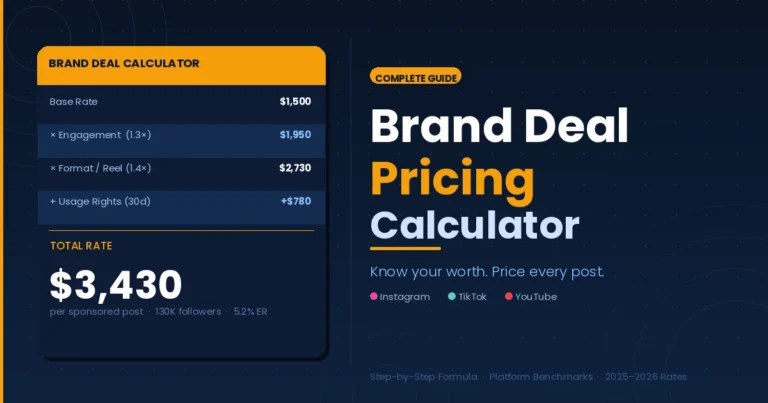
How much should I charge for a sponsored post? A common starting formula is $100–$500 per 10,000 followers, then adjusted upward for high-engagement rates, premium niches, and usage rights. Finance and B2B creators apply a 2–3x niche multiplier. A micro-influencer with 30,000 engaged followers in personal finance can legitimately charge $900–$2,700 per post using this framework, versus $300–$900 for a lifestyle creator at the same size. Always negotiate usage rights, exclusivity periods, and revision rounds as separate line items.
Do influencers pay taxes on their earnings? Yes — influencer income is generally classified as self-employment income in the US and most other jurisdictions, subject to income tax and self-employment tax (currently 15.3% in the US before deductions). H&R Block’s 2026 Creator Pulse Survey found most creators are underprepared for their tax obligations. The standard practice among professional creators is to set aside 25–35% of gross income for taxes, deduct legitimate business expenses (equipment, software, editing services, home office), and work with an accountant experienced in digital creator income.
The Bottom Line
The average influencer income in 2026 sits at two numbers simultaneously: $65,000 on paper, and far less for most working creators in practice. The creators who actually earn well are not necessarily the ones with the largest audiences — they’re the ones who chose a high-value niche, built engaged communities, and stacked multiple income streams before they needed them.
If you’re starting out, the clearest single action step is to pick a niche with real advertiser demand — finance, tech, health, or B2B — before obsessing over follower count. If you’re already creating, audit your income sources: if more than 60% comes from a single stream, one algorithm change could significantly damage your livelihood.
The creator economy is real, growing, and worth $32.6 billion globally in 2026. The opportunity is genuine. But the income figures that matter are the ones belonging to creators who treat this as a business — not the headline averages that make the news.
Keep your edge sharp—our top reads deliver the knowledge that keeps you ahead of the pack.